


Abstrakt
Qloballaşma, miqrasiya, urbanizasiya və ətraf mühitdə baş verən dəyişikliklər insan sağlamlığına, xüsusilə immun sisteminin funksional vəziyyətinə əhəmiyyətli təsir göstərir. Bu amillərin təsiri nəticəsində anadangəlmə immun çatışmazlıqları haqqında elmi təsəvvürlər əhəmiyyətli dərəcədə dəyişmiş və hazırda bu xəstəliklər daha geniş anlayış olan immunitetin anadangəlmə səhvləri (Inborn Errors of Immunity – IEI) termini ilə ifadə olunur. Əvvəllər nadir və çox zaman gec diaqnostika olunan xəstəliklər kimi qiymətləndirilən bu patologiyalar hazırda qlobal səhiyyənin mühüm problemlərindən biri hesab edilir. Molekulyar-genetik texnologiyaların sürətli inkişafı immunitetin anadangəlmə səhvlərinin erkən və dəqiq diaqnostikasına imkan yaratmışdır. Beynəlxalq əməkdaşlığın genişlənməsi, qlobal xəstə registrlərinin yaradılması və klinik protokolların standartlaşdırılması bütün dünyada bu xəstəliklərin aşkar edilmə səviyyəsinin yüksəlməsinə şərait yaratmışdır. Eyni zamanda, ətraf mühit amillərinin mikrobiota və mikrobiomun tərkib və funksiyasına təsiri immun sisteminin fəaliyyətinin formalaşmasında mühüm rol oynayır. TREC/KREC analizlərindən istifadə etməklə neonatal skrininq bir sıra ölkələrdə ağır immun çatışmazlığı formalarının, xüsusilə ağır kombinə olunmuş immun çatışmazlığının (SCID) erkən aşkarlanması məqsədilə getdikcə daha geniş tətbiq olunur və standart diaqnostik yanaşmaya çevrilməkdədir. İmmunitetin anadangəlmə səhvləri konsepsiyasının formalaşması immun pozğunluqlarına yanaşmada yeni paradiqmanı əks etdirir. Bu konsepsiyaya əsasən, immun sisteminin xəstəlikləri sadəcə ayrı-ayrı immun hüceyrələrinin və ya molekullarının funksional pozğunluğu kimi deyil, genetik və ətraf mühit amilləri ilə qarşılıqlı əlaqədə olan mürəkkəb və dinamik proseslər kimi qiymətləndirilir. Müasir yanaşmada immun sistemi yalnız hüceyrə və molekulların məcmusu deyil, genetik xüsusiyyətlər və ətraf mühit amilləri ilə qarşılıqlı əlaqədə fəaliyyət göstərən inteqrasiya olunmuş bioloji ekosistem kimi nəzərdən keçirilir.
Əsas mətn
In recent decades, globalization has profoundly influenced medicine alongside economic and communication systems. It has facilitated the discovery of previously unrecognized diseases and enabled the rapid global exchange of scientific knowledge regarding diagnosis and treatment. Enhancing the translation of scientific findings into clinical practice has become a key priority in modern healthcare [1,4].
Globalization, migration, urbanization, and environmental changes significantly affect immune system function. Increasing interactions across geographical, ethnic, and social boundaries have further shaped immune responses. These developments have led to a transformation in the understanding of congenital immunodeficiencies. Once considered rare and poorly characterized, these conditions are now recognized as a significant global health issue [2,3,8]. Historically, primary immunodeficiencies were frequently misdiagnosed or overlooked, with patients receiving only symptomatic treatment for recurrent infections. Advances in immunology and genetics have demonstrated that these disorders comprise a heterogeneous group of diseases with diverse clinical manifestations. Consequently, the term inborn errors of immunity (IEI) has been adopted to reflect this complexity [2,7,8].
Changing Perspectives in a Globalizing World Globalization has accelerated progress in medical technologies and genetic research. Modern molecular diagnostic methods allow early and accurate identification of IEI. International cooperation, global databases, and standardized clinical protocols have significantly increased detection rates. Although these conditions were previously under recognized, substantial progress has been achieved in recent years. Nevertheless, globalization presents both advantages and challenges (Figure 1) [1,3]. The foundation of immune function lies within the human genome. Epigenetic modifications regulate gene expression and are highly sensitive to environmental factors such as infections, microbiome composition, toxins, and stress. As a result, individuals with the same genetic mutation may exhibit markedly different phenotypes, ranging from severe combined immunodeficiency (SCID) to mild antibody deficiencies. Conversely, similar clinical phenotypes may arise from different genetic mutations [5,12].
Key mechanisms underlying genetic variability include:
- Gene frequency
- Diversity of gene expression
- Gene–gene interactions
- Environmental influences [6,7]
Globalization, urbanization, environmental pollution, and changes in the microbial environment can lead to the following consequences: increased incidence of certain genetic diseases in the population, changes in the clinical symptoms of genetic diseases, increased risk of genetic predisposition, and the spread of rare mutations in consanguineous marriages. From the perspective of modern genetics and immunology, immunodeficiency diseases are of particular interest.
Previously, many children with severe primary immunodeficiencies died at an early age. Today, thanks to modern and effective treatments such as immunoglobulin therapy, bone marrow transplantation, and gene therapy, patients survive into adulthood and have children. As a result, some rare mutations (CTLA4 deficiency, LRBA deficiency, APDS (PIK3CD), STAT3, and ADA deficiency) can persist and become more common in the population. Environmental factors also influence immune function through their effects on the microbiota and microbiome. The microbiome comprises all microorganisms and their genetic material residing in and on the human body, forming a complex ecosystem that affects metabolism, immunity, and overall health. Its composition is highly individualized and influenced by diet, lifestyle, and environmental exposures.
The microbiota plays a critical role in immune system development, immune memory formation, and immune regulation. Under normal conditions, the immune system and microbiota maintain a balanced relationship that ensures protection against pathogens while preserving tolerance to harmless antigens. However, factors such as excessive antibiotic use and dietary additives may disrupt this balance, leading to immune dysregulation. The development of the immune system and the maintenance of homeostasis are just two of the many areas in which the microbiota is important. It is known that a healthy microbiota balance is important in the management of inflammatory responses by supporting immune tolerance. In this regard, first of all, the interactions between the microbiota and the immune system are investigated, and the influence of the microbiota on the immune system is studied in detail. Then, the molecular and cellular mechanisms of the microbiota balance in specific autoimmune diseases can be evaluated. In this regard, the interactions and clinical manifestations of these two mechanisms should be studied, and therapeutic approaches targeting the microbiota, such as prebiotics, probiotics, and fecal microbiota transplantation, may be prescribed [12].
Microbiome alterations in patients with IEI may result in dysbiosis, microbial translocation, mucosal immune dysfunction, chronic inflammation, and impaired immune regulation. These processes contribute to complications such as autoimmunity, lymph proliferation, and malignancy, significantly affecting patient outcomes and quality of life [9,10,12].
IEI in the Context of the COVID-19 Pandemic The COVID-19 pandemic highlighted variability in immune responses across populations. Environmental factors such as urban density, pollution, and microbiome diversity may influence susceptibility and disease severity. The pandemic also exposed vulnerabilities in healthcare systems, particularly affecting patients with IEI. Disruptions in plasma donation negatively impacted the availability of immunoglobulin replacement therapy, a cornerstone of treatment. Patients with IEI are at increased risk of infections, and ongoing research explores genetic predisposition to severe COVID-19. Additionally, vaccine responses in these patients may be suboptimal due to impaired B- and T-cell immunity. Consequently, efforts have intensified to develop more effective and durable immunization strategies [5].
New Concepts in Inborn Errors of Immunity Advances in molecular genetics have redefined the classification of immune disorders, leading to the adoption of the term inborn errors of immunity (IEI). The immune system is now conceptualized as a dynamic and integrated ecosystem. The concept of the immunome has emerged, reflecting the interaction between genetic factors and environmental influences [3,4,6].
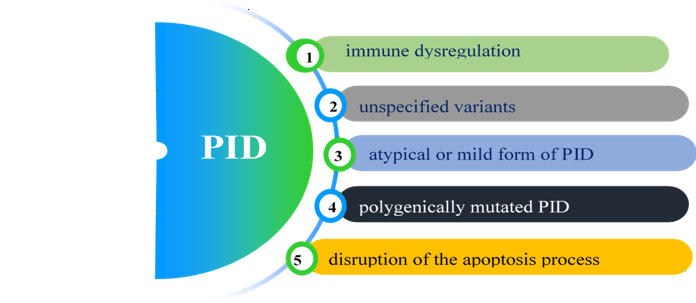
Next-generation sequencing (NGS) has identified more than 690 gene defects associated with IEI. Thus, there has been a shift the paradigm from isolated genetic defects to complex networks of immune dysregulation, from the importance of a single gene to the multiple interactions of genetic changes [1, 5, 12]. As a result, new forms of PID have emerged (Figure 2).
Newborn Screening Programs Newborn screening programs are implemented in many countries and now it is part of routine healthcare, although the range of screened conditions varies widely. Initially introduced for the detection of phenylketonuria, these programs now have expanded significantly over time [12, 13]. This program allows us to detect several serious hereditary diseases before clinical symptoms even appear. Also, it plays a critical role in preventing severe complications. This is particularly important for primary immunodeficiencies, where early diagnosis can be life-saving. In 2022, this program in Azerbaijan is dedicated to the following diseases: phenylketonuria, cystic fibrosis, adrenogenital syndrome, hypothyroidism, and galactosemia. In 2026-2027, the program plans to include testing for severe combined immunodeficiency (SCID) using a heel-prick blood test.
TREC/KREC-based screening is increasingly used for early detection of severe IEI, particularly SCID. TREC reflects newly formed T-lymphocytes. It is a small DNA fragment formed during T-cell development in the thymus and indicates the number of naive T cells. KREC reflects newly formed B cell. SCID is characterized by: impaired T-cell development, reduced or absent B cells, dysfunction of natural killer (NK) cells Early diagnosis enables timely hematopoietic stem cell transplantation (HSCT), significantly improving outcomes. This underscores the importance of early identification in reducing morbidity and mortality [1, 6].
Future Directions
- Integration of artificial intelligence in immunological diagnostics
- Development of global registries combining genomic and clinical data
- Strengthening multidisciplinary collaboration
Expansion of telemedicine to improve access in low-resource settings [4,5]
CONCLUSION A multidisciplinary approach is essential in the management of patients with IEI, involving immunologists, pediatricians, geneticists, infectious disease specialists, and other healthcare professionals. Globalization has transformed the understanding and management of primary immunodeficiencies. Advances in diagnostics, treatment, and international collaboration have improved patient outcomes. Continued progress in this field will further enhance our understanding of immune system disorders and support the development of innovative therapeutic strategies.
Şəkillər
Açar sözlər
İstinadlar
1. Rivière JG, Cantenys-Saba R, Carot-Sans G, et al. Current perspectives and challenges of using artificial intelligence in immunodeficiencies. J Allergy Clin Immunol. 2025;156(4):878–888. doi:10.1016/j.jaci.2025.06.015
2. Reyes S, Condino-Neto A, Stepensky P. Global perspectives on primary immune deficiency diseases. In: Stiehm's Immune Deficiencies. 2020. p. 1129–1142. doi:10.1016/B978-0-12-816768-7.00054-5
3. Condino-Neto A, Sullivan K. The relevance of primary immunodeficiency registries on a global perspective. J Allergy Clin Immunol. 2021;148(5):1170–1171. doi:10.1016/j.jaci.2021.08.023
4. Abolhassani H, Azizi G, Sharifi L, et al. Global systematic review of primary immunodeficiency registries. Expert Rev Clin Immunol. 2020;16(7):717–732. doi:10.1080/1744666X.2020.1801422
5. Meyts I, Bousfiha A, Duff C, et al. Primary immunodeficiencies: a decade of progress and a promising future. Front Immunol. 2021;11:625753. doi:10.3389/fimmu.2020.625753
6. Poli C, Aksentijevich I, Bousfiha A, et al. Human inborn errors of immunity: 2024 update on the classification from the International Union of Immunological Societies Expert Committee. J Hum Immun. 2025;1(1):e20250003. doi:10.70962/jhi.20250003
7. Bousfiha A, Jeddane L, Moundir M, et al. The 2024 update of IUIS phenotypic classification of human inborn errors of immunity. J Hum Immun. 2025;1(1):e20250002. doi:10.70962/jhi.20250002
8. Vichare V, Kilich G, Cunningham-Rundles C, et al. Automated data extraction model for the USIDNET registry: bigger, faster, and better data collection. J Hum Immun. 2026;2(1):e20250118. doi:10.70962/jhi.20250118
9. Yurtseven B, Aydemir E, Ayaz F. The role of intestinal microbiota and immune system interactions in autoimmune diseases. Immunotargets Ther. 2025;14:1347–1372. doi:10.2147/ITT.S569016
10. Al-Nesf MA, Morgan D, Mohamed-Ali V. Primary immunodeficiency and the microbiome. Curr Opin Pediatr. 2021;33(6):633–638. doi:10.1097/MOP.0000000000001067
11. Belkaid Y, Hand TW. Role of the microbiota in immunity and inflammation. Cell. 2014;157(1):121–141. doi:10.1016/j.cell.2014.03.011
12. Guliyeva LM, Hajiyeva NN. The role of genetic testing in optimizing screening in newborns. Azerbaijan Journal of Perinatology and Pediatrics. 2025;11(1). doi:10.28942/jpp.v11i1y2025.106
13. Ismayilova Sh. Neonatal screening: international experience. Eurasian Journal of Clinical Sciences. 2020;2(2):63–70. doi:10.28942/ejcs.v2i2.90
Məqalə barədə təfərrüatlar:

Nəşr tarixçəsi

Dərc edilib: 13.Oct.2026

Müəllif hüququ
© 2022-2025. Azərbaycan Tibb Universitetinin nəşri. Jurnalın elektron versiyası "Uptodate in Medicine" tibb nəşriyyatı tərəfindən dərc olunur. Bütün hüquqlar qorunur.Əlaqəli məqalələr
Baxılıb: 10